Введение
Основная задача терапии СД 2 типа (СД2) заключается в достижении адекватного контроля показателей углеводного обмена, предотвращении развития микро- и макрососудистых осложнений [1]. В качестве препарата первой линии, как правило, используется метформин. При недостижении целевых показателей углеводного контроля или плохой переносимости метформина требуется коррекция терапии с назначением других сахароснижающих препаратов.
Агонисты рецепторов ГПП-1 (арГПП-1) представляют собой пептидные препараты, предназначенные для активации рецепторов ГПП-1, которые играют важную роль в гомеостазе глюкозы [2], применяемые в инъекционной форме в клинической практике с 2005 г.
Внутри класса арГПП-1 выделяют препараты с различной химической структурой. Альбиглутид, дулаглутид, семаглутид и лираглутид представляют собой модифицированные аналоги человеческого ГПП-1; экзенатид и ликсисенатид – производные эксендина (гормона из слюны ящерицы гила-монстра), обладающего структурным и функциональным сходством с ГПП-1 [3].
Активация рецепторов ГПП-1 нативным субстратом или арГПП-1 стимулирует глюкозозависимую секрецию инсулина и подавляет гиперсекрецию глюкагона, обеспечивая контроль гликемии [2]. При низком уровне глюкозы крови ГПП-1 не стимулируют секрецию инсулина, что способствует поддержанию нормальной концентрации глюкозы и одновременно снижает риск развития гипогликемии [3]. Одновременно терапия арГПП-1 приводит к снижению массы тела [2]. Препараты данной группы вызывают снижение уровня липидов и артериального давления, а также уменьшают риск сердечно-сосудистых событий [4].
Назначение арГПП-1 целесообразно пациентам с СД2 при наличии показаний к кардио-ренальной защите (наличие или высокий риск АССЗ, ХБП). Терапия данными препаратами положительно влияет на смертность от сердечно-сосудистых причин, развитие фатального и нефатального инфаркта миокарда, инсульта, течение ХБП и является вариантом болезнь-модифицирующего лечения пациентов с СД2. В связи с этим рекомендуется рассматривать возможность включения арГПП-1 с подтвержденными кардио-ренальными эффектами в схему лечения подобных пациентов. Также целесообразно использовать данные препараты в комплексной терапии у пациентов с метаболически ассоциированной жировой болезнью печени (МАЖБП) [5, 6]. Данные рекомендации по выбору терапии для пациентов с высоким риском сердечно-сосудистых заболеваний (CCЗ) следует использовать независимо от исходного уровня HbA1c.
В то же время исследования показали, что и пациенты, и медицинские работники недостаточно активно используют иньекционную терапию арГПП-1 [7, 8]. Так, по анализу базы данных США, только 5,4% пациентов с СД2 без ССЗ и 4,1% с ССЗ были назначены арГПП-1 [9]. В структуре сахароснижающей терапии, по данным Российского федерального регистра пациентов с СД2 на 2020 г., назначение арГПП-1 не превышает 0,3% [10]. Это частично можно объяснить тем, что до недавнего времени все арГПП-1 были доступны только в виде подкожных инъекций, с кратностью введения дважды в день (экзенатид [11]), один раз в день (ликсисенатид [12] и лираглутид [13]) или раз в неделю (семаглутид [14], дулаглутид [15] и эксенатид с пролонгированным высвобождением [16]). Это может быть менее предпочтительным для некоторых пациентов по сравнению с пероральным введением [17].
В 2019 г. в США был одобрен к применению хорошо известный представитель класса арГПП-1 – семаглутид, но в таблетированной форме для перорального приема [18]. Препарат также был одобрен в Европе и Японии, а в апреле 2021 г. был зарегистрирован в Российской Федерации [19].
Многие пациенты предпочитают использование пероральных препаратов для длительной терапии СД2 ввиду удобства их применения в случае негативного отношения к инъекциям [20]. В связи с этим появление пероральной формы семаглутида может значительно повысить приверженность к терапии и позволит использовать его бо́льшей когорте пациентов [21].
Необходимо отметить, что семаглутид – это рекомбинантный длительно действующий аналог человеческого ГПП-1, который гомологичен нативному ГПП-1 на 94% (рис. 1). Использование его пероральной формы стало возможным за счет коформуляции с фармацевтически неактивным усилителем абсорбции – SNAC (натриевая соль N‑(8‑(2‑гидроксибензоил)амино)каприловой кислоты). Такой усилитель абсорбции приводит к изменению локальной кислотности в желудке, а также увеличивает проницаемость слизистой, при этом защищает молекулу препарата от деградации пищеварительными ферментами, обеспечивая всасывание мономеров семаглутида через слизистую стенки желудка в системный кровоток [22, 23, 24].
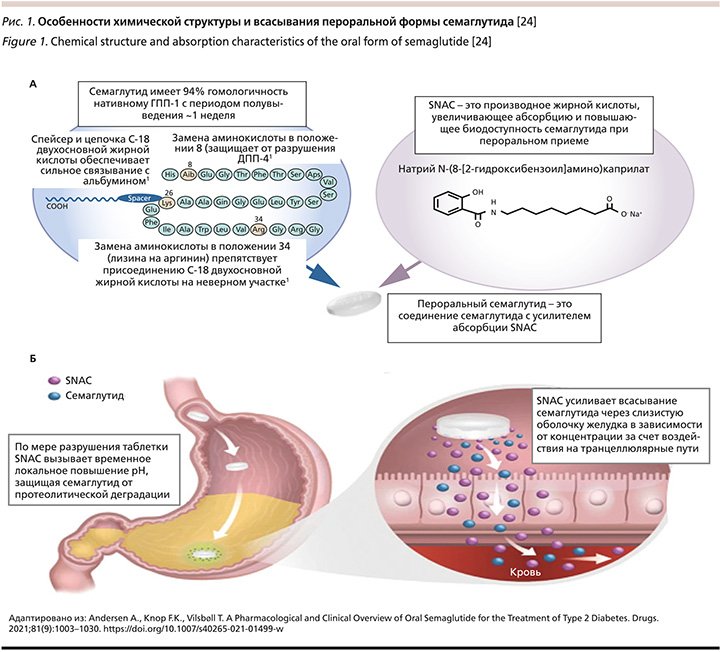
Исследования второй фазы клинических программ показали, что пероральная форма семаглутида имеет низкую биодоступность (≈1%) и длительный период полувыведения (около недели), поэтому требуется принимать препарат один раз в день. После перорального приема Cmax семаглутида достигается через 1 ч после приема. Стабильная концентрация достигается через 4–5 недель приема.
Поскольку активность препарата определяется факторами, влияющими на его абсорбцию, необходимо соблюдение определенных условий приема, минимизирующих воздействие этих факторов. Важно исключить прием пищи, напитков и других лекарственных средств в момент приема перорального семаглутида. Рекомендуется принимать таблетку семаглутида натощак, как минимум за 30 минут до еды, запивая достаточным количеством воды (не менее половины стакана, что эквивалентно 120 мл), поскольку более значительное количество жидкости разбавляет его концентрацию и нарушает соотношение активного вещества со вспомогательным компонентом [22].
Концентрация вспомогательного компонента SNAC в составе также была подобрана для оптимизации биодоступности препарата. Было показано, что концентрация SNAC 300 мг обеспечивает наилучшее всасывание семаглутида, а повышение более 300 мг даже несколько снижает конечную концентрацию препарата в кровотоке.
Всасывание семаглутида происходит преимущественно в желудке, поэтому не рекомендуется прием более одной таблетки перорального семаглутида за раз, поскольку это может неблагоприятно влиять на его абсорбцию. Несмотря на возможную вариабельность концентрации препарата, показано, что равновесная концентрация при ежедневном приеме перорального семаглутида достигается к концу первого месяца терапии [25].
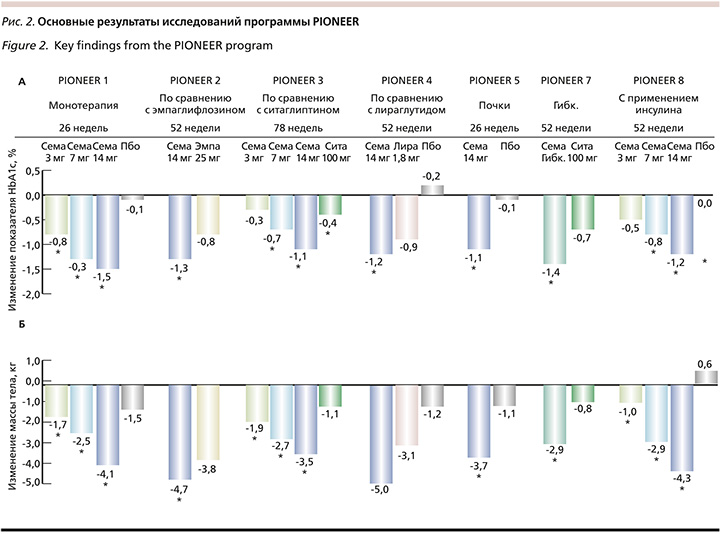
В клиническом исследовании II фазы по подбору оптимальной дозы перорального семаглутида было показано, что с точки зрения клинической эффективности, безопасности и переносимости пероральная и инъекционная формы семаглутида демонстрируют сопоставимые результаты [26]. Эффективность и безопасность перорального семаглутида оценивалась в клинической программе PIONEER (рис. 2) [27, 28], которая состояла из 8 исследований третьей фазы и включала 9543 пациента. Было проведено исследование семаглутида в сравнении с плацебо в качестве монотерапии (PIONEER 1), в сравнении с эмпаглифлозином (PIONEER 2), ситаглиптином (PIONEER 3), лираглутидом (PIONEER 4). Эффективность терапии оценивалась у пациентов с нарушением функции почек (PIONEER 5). Клиническая программа включала также исследование сердечно-сосудистой безопасности семаглутида (PIONEER 6). Было проведено сравнительное исследование «гибкой» дозы семаглутида с ситаглиптином (PIONEER 7) и в дополнение к инсулину (PIONEER 8).
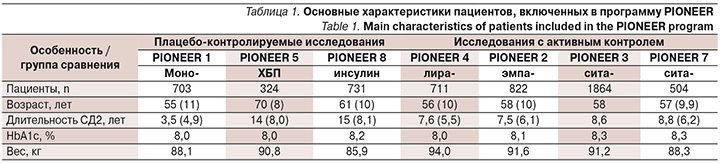
Основными конечными точками в исследованиях гликемического контроля были степень снижения HbA1c, массы тела и доля пациентов, достигших целей терапии. Основные характеристики пациентов представлены в табл. 1.
В исследовании PIONEER 1 оценивались эффективность и безопасность монотерапии пероральным семаглутидом по сравнению с плацебо у пациентов с СД2, находившихся только на диетотерапии и адекватной физической активности. В исследование было включено 703 пациента с уровнем HbA1c 7–9%. Пациенты были рандомизированы на 4 группы: три группы находились на терапии пероральным семаглутидом в дозах 3 мг, 7 мг и 14 мг; в 4-й группе пациенты принимали плацебо. По результатам 26 недель терапии скорректированная по плацебо разница снижения HbA1c в группе семаглутида варьировала от -0,% до -1,4 % (p<0,001 для всех доз). На фоне терапии семаглутидом 14 мг было продемонстрировано значимое снижение веса (на -2,3 кг больше в сравнении с плацебо). Из нежелательных явлений были отмечены транзиторные диспептические явления средней и легкой степени тяжести [29].
В исследовании PIONEER 2 применение семаглутида в пероральной форме в дозе 14 мг сравнивалось с применением иНГЛТ-2 (эмпаглифлозин 25 мг). Исследование длилось 52 недели и включало 821 пациента. Средняя длительность СД2 составила около 7 лет, исходный уровень HbA1c около 8%, средний вес пациентов – 92 кг. На 26-й неделе терапии на фоне приема семаглутида было отмечено достоверное снижение HbA1c (-1,4% против -0,9%, p<0,0001), а на 52-й неделе (-1,3% против -0,8%, p<0,0001). Около 72% пациентов в группе семаглутида достигли цели терапии по снижению HbA1c <7% против 48% на терапии эмпаглифлозином. На фоне терапии обоими препаратами наблюдалось снижение массы тела: к 26-й неделе оно составило -4,2 кг при приеме перорального семаглутида и -3,8 кг на фоне эмпаглифлозина. В дальнейшем снижение массы тела на терапии эмпаглифлозином не прогрессировало, тогда как при применении перорального семаглутида отмечалось дальнейшее уменьшение веса (-4,7 кг против -3,8 кг; p=0,01) к 52-й неделе исследования [30].
В клиническом исследовании PIONEER 4 сравнивали эффективность и безопасность перорального семаглутида в дозе 14 мг по отношению к инъекционной терапии арГПП-1 – лираглутидом 1,8 мг. Исследование проводилось по схеме двойного слепого плацебоконтролируемого испытания: пациенты принимали препараты исследования в соответствующей форме выпуска, а для целей полного контроля эффекта была введена группа плацебо. По основной конечной точке исследования в группе терапии семаглутидом было показано значимое превосходство как по снижению HbA1c, так и по снижению массы тела по сравнению с лираглутидом и плацебо: изменение HbA1c составило -1,2%, -0,9% и -0,2% соответственно, массы тела -5,0 кг, -3,1 кг и -1,2 кг соответственно. Частота нежелательных явлений на фоне терапии семаглутидом сопоставима с классом арГПП-1 в целом. В исследовании у пациентов на фоне терапии пероральным семаглутидом 14 мг и лираглутидом 1,8 мг был сходный профиль нежелательных явлений, таких как тошнота, диарея, рвота. Они были не тяжелые, носили транзиторный характер и часто регистрировались на 8-й неделе терапии [31].
В исследованиях PIONEER 3 и PIONEER 7 пероральный семаглутид в дозах 3, 7 и 14 мг сравнивался с терапией ситаглиптином 100 мг у пациентов, находящихся на терапии 1–2 сахароснижающими препаратами. Исследование PIONEER 3 длилось 78 недель, но уже к 26-й неделе была достигнута первичная конечная точка в отношении превосходства по снижению HbA1c на фоне терапевтических доз семаглутида 7 мг (-1,1%) и 14 мг (-1,4%) в сравнении с ситаглиптином 100 мг. К 78-й неделе терапии преимущество терапевтических доз семаглутида над ситаглиптином сохранялось. Также было продемонстрировано значимое снижение веса в группах семаглутида 3, 7 и 14 мг по сравнению с ситаглиптином 100 мг: -1,9, -2,2, -3,4 и -1,1 кг соответственно [32].
В другом исследовании, PIONEER 7, также сравнивали пероральный семаглутид с ситаглиптином. Исследование было рандомизированным, открытым, с титрацией дозы семаглутида в зависимости от уровня гликемии или переносимости препарата. Основной конечной точкой было достижение целей терапии – HbA1c <7,0 %. Исследование длилось 104 недели и состояло из двух фаз по 52 недели. В первой фазе исследования пациенты (n=504) получали терапию в соответствии с рандомизацией. Во второй фазе пациенты, изначально получавшие пероральный семаглутид, продолжали его прием, тогда как участники группы ситаглиптина были перерандомизированы на продолжение терапии ситаглиптином или переключение на лечение семаглутидом. По завершении первой фазы исследования PIONEER 7 структура распределения пациентов по принимаемым дозам семаглутида 3, 7 и 14 мг составила 10, 30 и 60% соответственно, что позволило 63% пациентов достигнуть HbA1c <7% в сравнении с 23% на терапии ситаглиптином 100 мг. Средняя межгрупповая разница снижения HbA1c составила -0,7%. Во второй фазе пациенты, находившиеся исходно на терапии семаглутидом, поддерживали целевые параметры гликемии до 104-й недели. В этой же группе пациентов было отмечено дальнейшее снижение веса (-2,8 кг на 52-й неделе и -3,7 кг на 104-й неделе). Пациенты, оставшиеся на терапии ситаглиптином в период с 52-ой по 104-ю неделю, демонстрировали повышение HbA1c на +0,1%. Часть пациентов на терапии ситаглиптином была переведена на семаглутид, где дозы 3, 7 и 14 мг получали 13%, 20% и 66% участников соответственно. В этой подгруппе было продемонстрировано дальнейшее снижение HbA1c на 0,3%, а число пациентов с уровнем HbA1c <7,0% составило 53% против 29% у пациентов, оставшихся на ситаглиптине [33, 34].
В исследовании PIONEER 8 участвовали пациенты, находившиеся на инсулинотерапии. Оценивали эффективность терапии семаглутидом в дозах 3, 7 и 14 мг на фоне продолжающейся инсулинотерапии (с метформином или без него), по отношению к группе плацебо. Всего был рандомизирован 731 пациент в равном соотношении. Средняя исходная доза инсулина составляла около 60 Ед. По результатам исследования было показано, что во всех группах терапии семаглутидом наблюдалось значимое изменение HbA1c: -0,5, -1,0, -1,4% соответственно дозе. У большой доли пациентов удалось достичь целей терапии. Достижение HbA1c<6,5% было отмечено у 11,6, 19,5, 38,7 и 2,3% для 3, 7, 14 мг и плацебо соответственно, снижение веса от -1,0 кг до -4,3 кг в группе терапии семаглутидом в сравнении с плацебо [34]. Дополнительная сахароснижающая терапия требовалась меньшей доле пациентов в группе семаглутида: 29,3, 18,1, 17,1 и 36,4% для 3, 7, 14 мг и плацебо соответственно, а интенсификация инсулином, потребовалась 27,2, 17,6, 13,8 и 32,6% пациентов на дозе семаглутида 3, 7, 14 мг и плацебо соответственно [35]. В группе семаглутида отмечалось среднее снижение требуемой дозы инсулина на 2–9 Ед, тогда как в группе плацебо, напротив, наблюдалось ее среднее увеличение на 7–9 Ед. [36].
Клиническая эффективность семаглутида при нарушении функции почек оценивалась в исследовании PIONEER 5. В исследовании были рандомизированы 324 пациента со средней СКФ 48 мл/мин/1,73 м2. Исходно больные получали терапию метформином и/или производными сульфонилмочевины, базальным инсулином (с или без метформина). По результатам исследования на терапии семаглутидом в дозе 14 мг наблюдалось значимое снижение HbA1c на 1,1%, снижение массы тела на 3,7 кг в сравнении с плацебо (-0,1% и -1,1 кг). Эффективность терапии не зависела от исходной СКФ [37].
В исследовании PIONEER 6 оценивались сердечно-сосудистые исходы на терапии пероральным семаглутидом. В исследование вошли 3183 пациента, из них около 85% пациентов высокого сердечно-сосудистого риска. Средний возраст составил 66 лет, а длительность СД2 – около 15 лет. По результатам исследования PIONEER 6 была продемонстрирована безопасность перорального семаглутида в дозе 14 мг. Различий в риске нефатального инфаркта миокарда или инсульта между двумя группами лечения выявлено не было. В отношении вторичной конечной точки было показано, что на фоне терапии пероральным семаглутидом снижался риск сердечно-сосудистой смерти на 51% (p=0,03), также был ниже относительный риск смерти по любым причинам на 49% (p=0,008) [38].
Таким образом, по результатам анализа всех исследований программы PIONEER показано, что в сравнении с плацебо семаглутид в среднем снижал HbA1c на 1,04% (95% ДИ: ‑1,26%, -0,83%), а в сравнении с любыми препаратами сравнения значимо превосходил их по влиянию на HbA1c на дополнительные -0,33% (95% ДИ: -0,46%, -0,21%). Влияние на вес также было более значимым по сравнению с плацебо, так и по сравнению с активными препаратами – ‑2,52 кг (95% ДИ: -3,37 кг, -1,67 кг).
Общий риск развития любых нежелательных явлений на терапии семаглутидом, плацебо или активным контролем существенно не различался, однако при лечении семаглутидом отмечалась более высокая частота диспептических расстройств [38].
Изучение влияния перорального семаглутида на риск серьезных сердечно-сосудистых событий (MACE) у пациентов с СД2 и высоким кардиоваскулярным риском было проведено в исследовании SOUL (Semaglutide Cardiovascular Outcomes in Patients with Type 2 Diabetes). Это двойное слепое плацебоконтролируемое исследование эффективности семаглутида, основанное на оценке количества соответствующих событий.
В исследовании приняли участие 9650 пациентов в возрасте от 50 лет, прошедших рандомизацию, с уровнем НbА1с от 6,5 до 10,0% и имеющие АССЗ, ХБП или оба заболевания вместе. Пациенты были разделены на 2 группы: для получения либо перорального семаглутида один раз в день (максимальная доза 14 мг), либо плацебо в дополнение к стандартному лечению. Медианный период наблюдения составил 49,5 месяцев. Первичной конечной точкой были основные неблагоприятные сердечно-сосудистые события (сочетание смерти от сердечно-сосудистых причин, нефатального инфаркта миокарда или нефатального инсульта), оцениваемые в анализе времени до первого события. Подтверждающие вторичные конечные точки включали основные события, связанные с заболеваниями почек (сочетанная пятикомпонентная конечная точка). Первичное событие наблюдалось у 579 из 4825 участников (12,0%; частота 3,1 события на 100 человеко-лет) в группе, принимавшей пероральный семаглутид, по сравнению с 668 из 4825 пациентов (13,8%; частота 3,7 события на 100 человеко-лет) в группе плацебо (р= 0,006). Результаты по подтверждающим вторичным исходам не отличались значительно между двумя группами. Частота серьезных нежелательных явлений составила 47,9% в группе перорального семаглутида и 50,3% в группе плацебо; частота желудочно-кишечных расстройств составила 5,0% и 4,4% соответственно.
На основании данных исследования был сделан вывод, что у пациентов с СД2 и АССЗ, ХБП или комбинацией данных состояний применение перорального семаглутида было связано с более низким риском серьезных неблагоприятных сердечно-сосудистых событий по сравнению с плацебо, без увеличения частоты серьезных нежелательных явлений [39].
Отдельно следует остановиться на результатах, полученных в рамках почечного блока исследования. Пациенты с СД2 и АССЗ и/или ХБП (СКФ <60 мл/мин/1,73 м2 без нижней границы для настоящего анализа) случайным образом (1:1) были распределены на 2 группы: одной группе пациентов назначали пероральный семаглутид в дозе 14 мг, второй – плацебо, в дополнение к ранее проводимой терапии. При скрининге пациентов с ХБП, получавших заместительную почечную терапию (диализ или пересадка почки), исключали. Участники, инициировавшие заместительную почечную терапию во время исследования, продолжали получать рандомизированное лечение. Результаты оценивались по пятикомпонентному композитному показателю (≥50% снижение СКФ, устойчивое СКФ<15 мл/мин/1,73 м², начало хронической заместительной терапии почек или смерть от почечных или сердечно-сосудистых причин) и четырехкомпонентному показателю (без учета СС смерти). Отдельно оценивали изменения годовой скорости СКФ по отношению к исходному уровню. Для детального изучения была выделена подгруппа пациентов с СКФ <60 мл/мин/1,73 м² на старте наблюдения. Были определены целевые подгруппы пациентов: с исходным СКФ<60 и ≥60 мл/мин/1,73 м², а также в зависимости от применения иНГЛТ-2 на старте наблюдения. Результаты оценивались для каждой подгруппы. Пятикомпонентные точки наблюдались у 403 (8,4%) и 435 (9,0%) участников, принимавших пероральный семаглутид по сравнению с плацебо, соответственно (р=0,19). Четырехкомпонентная точка наблюдалась у 112 (2,3%) и 129 (2,7%) участников соответственно (р=0,22). Среднегодовое снижение СКФ было меньше при приеме перорального семаглутида, чем в группе плацебо (-1,67 против -2,06 мл/мин/1,73 м2; разница в терапии 0,40, р<0,0001). В подгруппе с исходным СКФ <60 мл/мин/1,73 м² пятикомпонентная почечная точка была выявлена у 185 из 1405 участников (13,2%) в группе перорального семаглутида и у 214 из 1411 участников (14,2%) в группе плацебо (р = 0,08), а четырехкомпонентная почечная точка наблюдалась у 72 из 1405 участников (5,1%) в группе перорального семаглутида и 87 из 1411 пациентов (6,2%) в группе плацебо (p=0,16) (табл. 2).
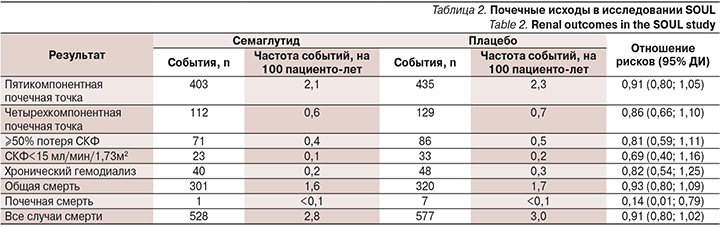
Среднегодовая скорость изменения СКФ была ниже в группе перорального семаглутида, чем в группе плацебо (-1,67 против -2,06 мл/мин/1,73 м2; р<0,0001). Влияние перорального семаглутида на снижение СКФ было численно более значительным в подгруппе с СКФ<60 мл/мин/1,73 м² на исходном уровне (пероральный семаглутид -1,04 против плацебо -1,59 мл/мин/1,73 м2; р<0,0001), чем СКФ≥60 мл/мин/1,73 м2 (пероральный семаглутид -1,93 против плацебо -2,27 мл/мин/1,73 м2; р<0,0001), хотя значение р между подгруппами не было статистически значимым (р=0,15).
У участников, получивших исходно иНГЛТ-2, пятикомпонентная почечная точка наблюдалась у 79 из 1296 (6,1%) на пероральном семаглутиде, против 71 из 1300 (5,5%) на плацебо. В подгруппе без исходной терапии иНГЛТ-2 пятикомпонентная почечная точка наблюдалась у 324 из 3529 участников (9,2%) против 364 из 3525 участников (10,3%) в группах перорального семаглутида и плацебо соответственно (р=0,204). Четырехкомпонентная композиционная почечная точка наблюдалась у 14 из 1296 участников (1,1%) в группе перорального семаглутида против 12 из 1300 участников (0,9%) в группе плацебо, которые исходно получали терапию иНГЛТ-2, тогда как в подгруппе без иНГЛТ-2 события произошли у 98 из 3529 участников (2,8%) против 117 из 3525 участников (3,3%) в группах перорального семаглутида и плацебо соответственно (р=0,420).
У пациентов исходно на терапии иНГЛТ-2 ежегодное снижение СКФ на пероральным семаглутидом по сравнению с плацебо составляло -1,36 против -1,53 мл/мин/1,73 м2 (р=0,17), а без терапии иНГЛТ-2 -1,78 против -2,26 мл/мин/1,73 м2 в год соответственно (р<0,0001). Терапия пероральным семаглутидом по сравнению с плацебо замедляла снижение СКФ более значимо у пациентов, не использовавших иНГЛТ-2.
Серьезные побочные эффекты были зарегистрированы у 2312 участников (47,9%), получавших пероральный семаглутид, и 2427 (50,3%) получавших плацебо. Лечение пероральным семаглутидом по сравнению с плацебо не было связано с повышением частоты серьезных побочных эффектов со стороны почек (1,19 против 1,45 на 100 пациенто-лет), включая острое повреждение почек (0,76 против 0,93 на 100 пациенто-лет). Таким образом, серьезные нежелательные явления происходили с одинаковой частотой во всех группах.
Следовательно, у пациентов с СД2 и ХБП пероральный семаглутид на фоне стандартного лечения не выявил статистически значимой разницы в основных почечных исходах по сравнению с плацебо. Однако у пациентов, получавших семаглутид, наблюдалось достоверное замедление процесса снижения СКФ. При этом была отмечена высокая безопасность терапии семаглутидом пациентов с ХБП [40].
В 2025 г. компания ПРОМОМЕД представила пероральную форму семаглутида – Семальтара® в разных терапевтических дозах (3 мг, 7 мг, 14 мг). Согласно инструкции, препарат идентичен пероральной форме семаглутида датской компании Novo Nordisk по основной субстанции и вспомогательным соединениям (натрия салкапрозат, целлюлоза микрокристаллическая, повидон К90, магния стеарат).
Согласно популяционной фармакокинетике, экспозиция семаглутида увеличивается пропорционально дозе. Начальная доза препарата Семальтара® составляет 3 мг 1 раз в сутки в течение 1 месяца. Через 1 месяц применения возможно увеличить дозу до 7 мг один раз в сутки. Для дальнейшего улучшения гликемического контроля возможно увеличение дозы до 14 мг 1 раз в сутки.
Максимальная рекомендуемая доза препарата Семальтара® для приема 1 раз в сутки составляет 14 мг. Прием двух таблеток по 7 мг для достижения эффекта дозировки 14 мг не изучался и поэтому не рекомендуется.
Препарат Семальтара® следует принимать натощак в любое время суток 1 раз в день, не менее чем за 30 минут до приема пищи или приема других пероральных лекарственных препаратов. Несоблюдение данного условия приведет к снижению всасывания семаглутида. Таблетку необходимо проглатывать целиком, запивая достаточным количеством воды (не менее половины стакана, что эквивалентно 120 мл). Таблетки не следует делить, измельчать или разжевывать, так как клинические данные о влиянии данных действий на всасывание семаглутида отсутствуют.
В случае пропуска дозы препарата пропущенную дозу дополнительно принимать не нужно, следует продолжить прием препарата в обычном режиме на следующий день.
Перед использованием препарата необходимо внимательно изучить инструкцию для минимизации нежелательных явлений и повышения эффективности терапевтического эффекта.
В связи с появлением таблетированной формы возникают вопросы о переводе пациентов с инъекционного семаглутида на пероральный. Пероральная форма семаглутида может стать более предпочтительным вариантом для стартовой терапии у тех пациентов, кто не готов к инъекционной терапии, например, из-за опасений, связанных с самостоятельным введением препарата, психологическим дискомфортом. Кроме того, Семальтара® может быть рассмотрена как вариант перехода на поддерживающую терапию после курса инъекционного семаглутида, для тех пациентов, которым более удобен прием таблетированных препаратов. По данным Overgaard R. и соавт. пероральный семаглутид в дозировке 14 мг и семаглутид 1 мг в виде подкожных инъекций обеспечивают сравнимое влияние на массу тела, поддержание уровня HbA1c и контроль СД2 [41].
Таким образом, пероральный семаглутид является высокоэффективным препаратом класса арГПП-1, обеспечивающим множество плейотропных эффектов у пациентов с СД2, который может быть рекомендован как новая возможность терапии семаглутидом для пациентов, испытывающих дискомфорт от инъекций.